Dhiyaa
A revision companion that gives a word, not the whole verse
Children aged 8–12 forget how verses begin and lose interest in long revision. Dhiyaa offers short daily sessions that return to where the child stumbled, gives hints instead of answers, and shows a source for every explanation.
Tuwaiq Academy project
- My role
- UX researcher & UI designer
- Project type
- Capstone 3 · AI-assisted learning app
- Team
- 5 researchers & designers
- Timeline
- 4 days
- Method
- Design Sprint
- Tools
- Figma · VS Code · Claude · ChatGPT
7
interviews: children, parents, teachers
7/7
said meaning and story help memory stick
5/7
stumble at the start of a verse
4/4
adults need a visible source to trust it
The challenge
Children revise at home with their mothers, often only when Mum is free. Forgetting stays hidden until recitation, and repeating a whole passage after one mistake feels like punishment. With AI and religious content, parents and teachers also need a trusted source for every answer.
My contribution
I was one of five UX researchers and UI designers on a 4-day Design Sprint at Tuwaiq Academy. We ran the interviews, affinity mapping, personas and journey maps together, then designed the child, parent and teacher experiences.
Children were interviewed with a parent present and consenting.
Key insights
Seven interviews: three children, two mothers and two Quran teachers.
A small hint is enough
Children stumble at the start of a verse, and the first word is enough to continue (5/7). “Help me with a word, but don’t finish everything for me.” — Rashed, a child we interviewed
Meaning anchors memory
Understanding the meaning and story of a verse helps it stick (7/7), alongside repetition.
Trust needs a source
All four adults said they wouldn’t use an AI tool without a visible source and clear limits.
Key decisions
01Graduated hints that revisit only the stumble
- User need
- Children want to finish the verse themselves; repeating everything after one mistake frustrates them.
- Design response
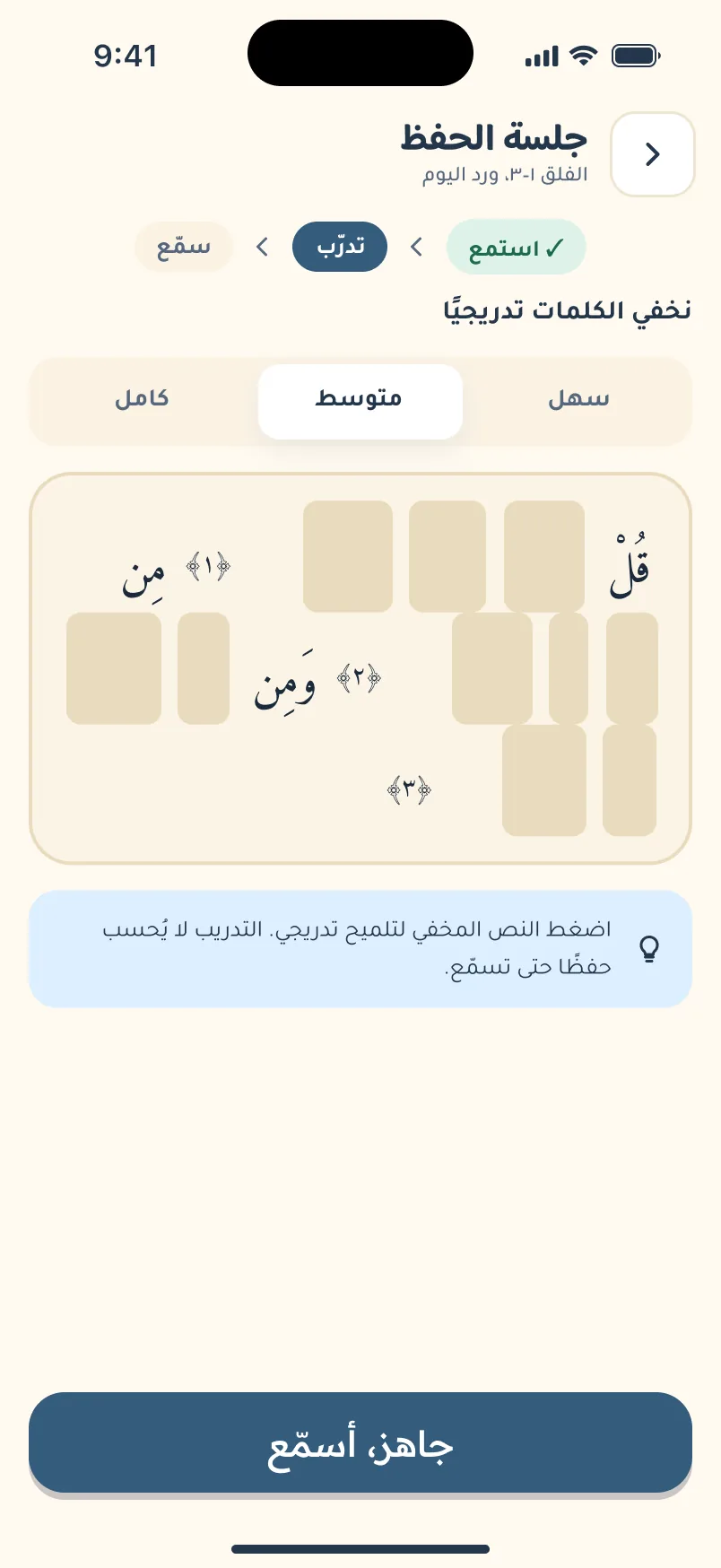
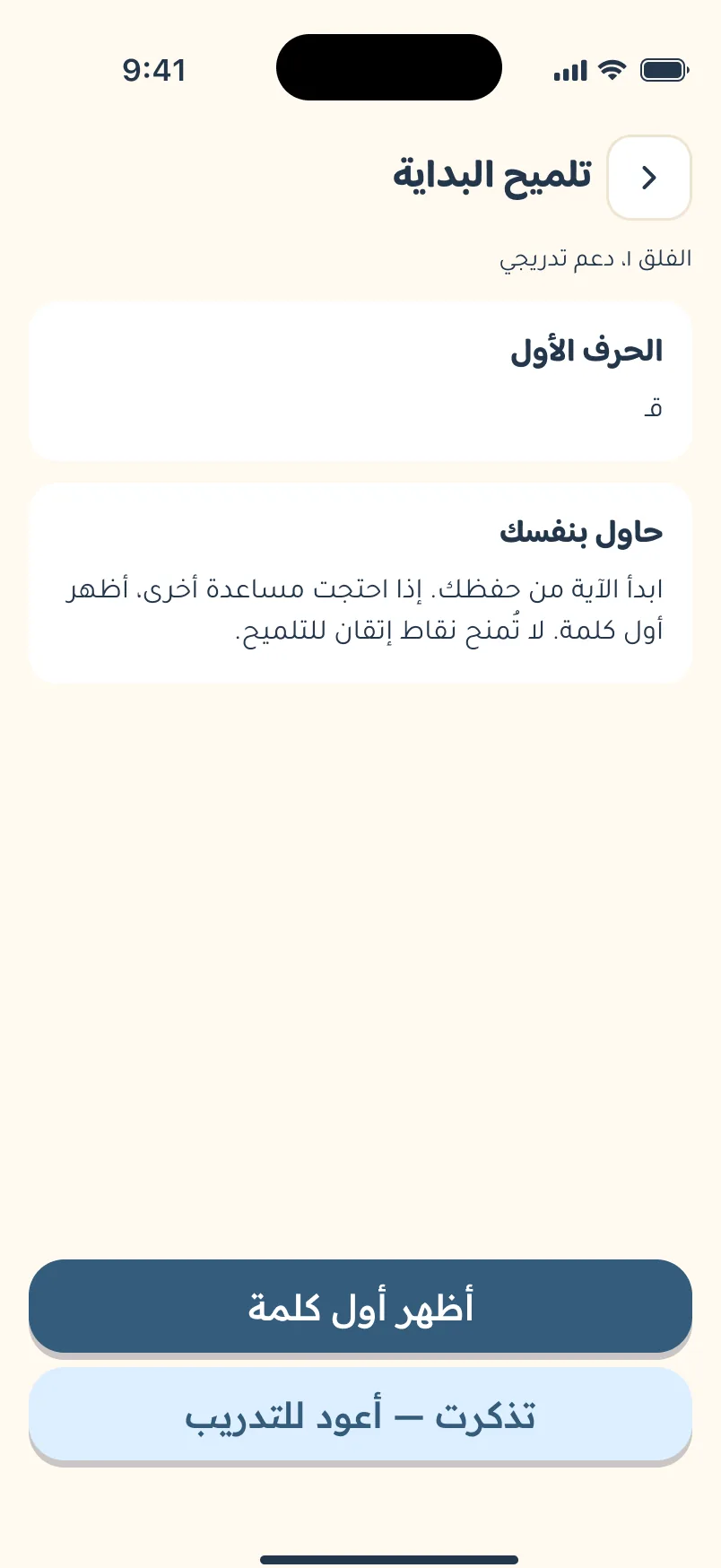
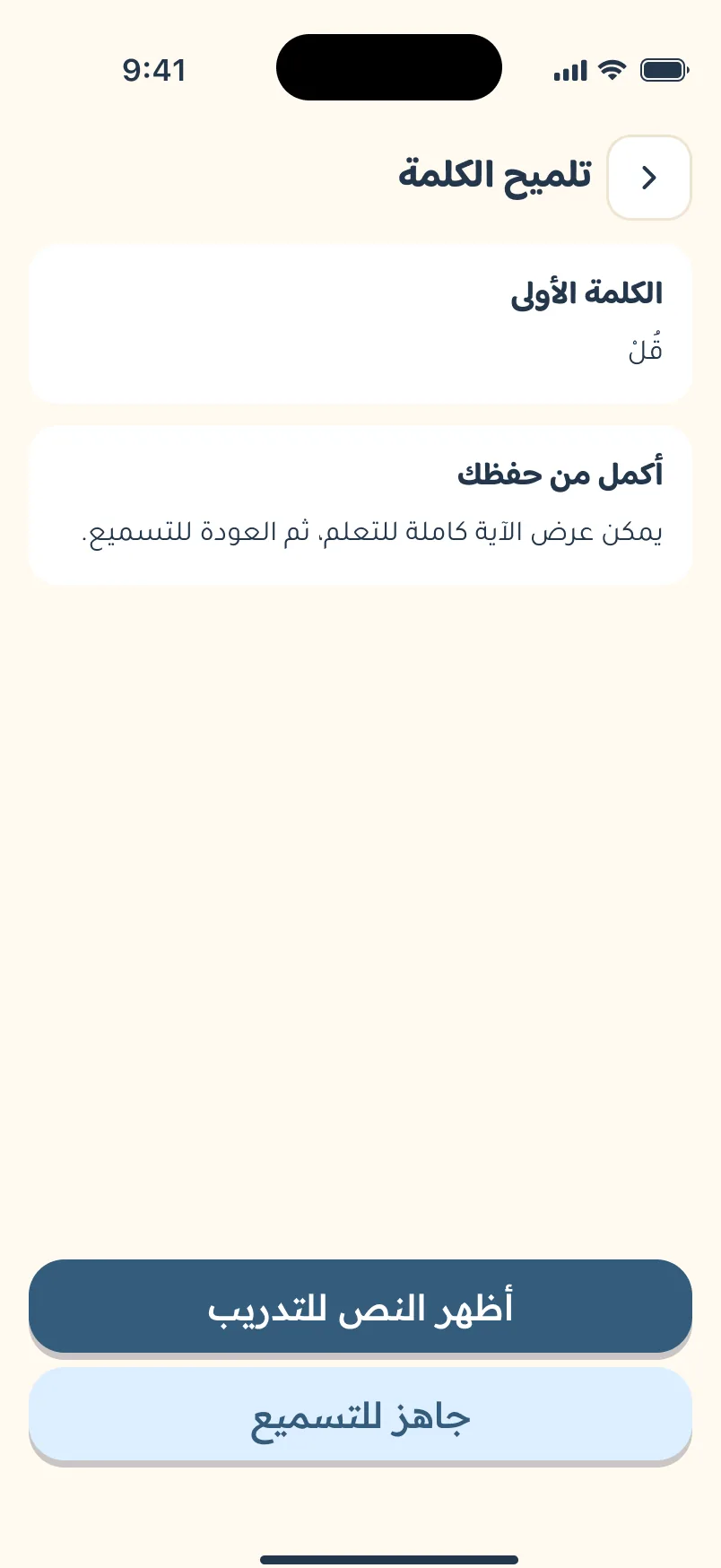
- First letter, then first word, then back to memory. Practice returns only to where the child stumbled.
- Why it matters
- It mirrors how parents and teachers already prompt, and keeps the effort with the child.
02Source first, or “I’m not sure”
- User need
- Adults won’t trust AI answers about the Quran without a source.
- Design response
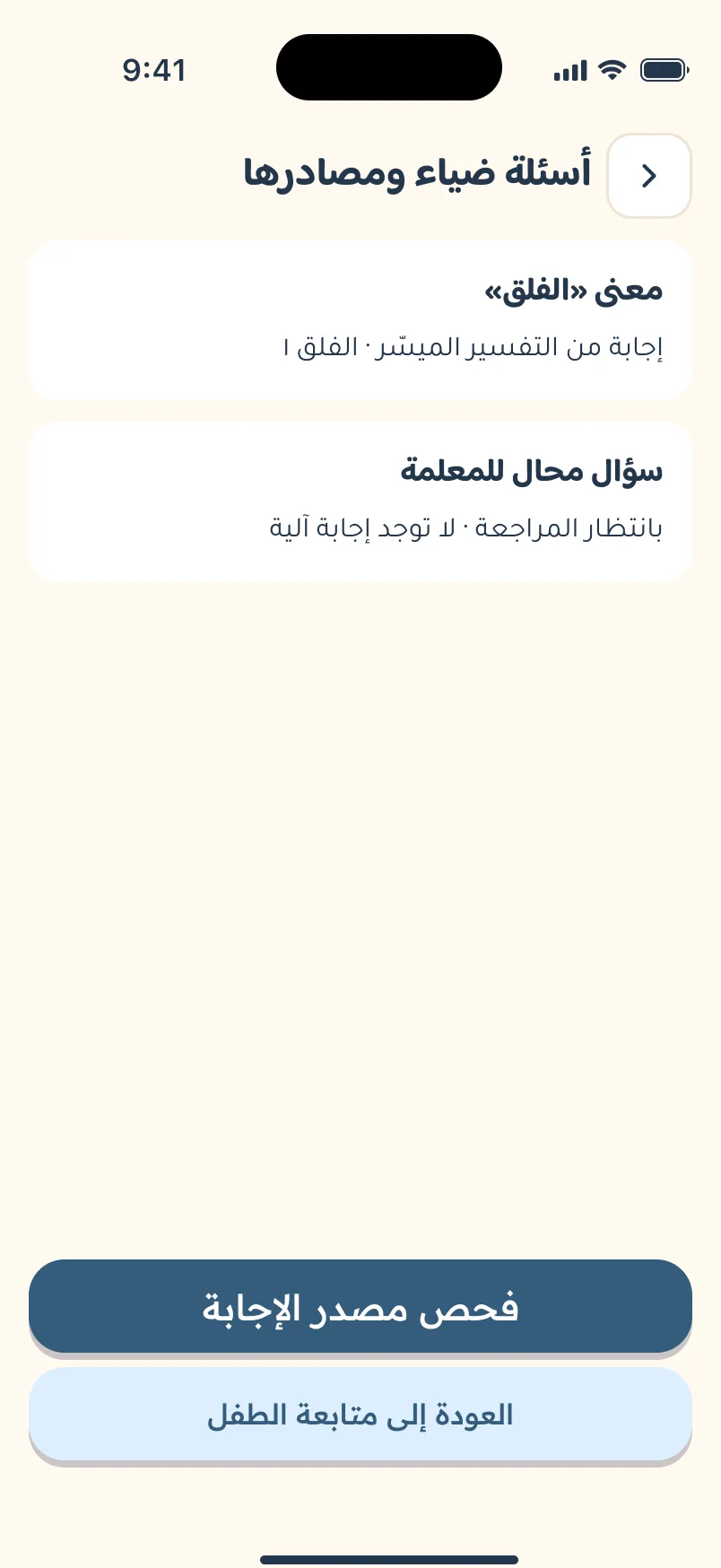
- Ask Dhiyaa answers only from approved content and shows the source. If there isn’t one, it says so and refers the question to the teacher. Parents can review every question.
- Why it matters
- Dhiyaa is a focused learning coach, not an open chatbot: no rulings and no generated interpretation.
03Short sessions, moderate rewards
- User need
- Long revision feels like a chore, and mothers have limited time.
- Design response
- A short daily session that starts from stumble points, with games unlocked after today’s portion and simple stars and streaks.
- Why it matters
- Rewards support the routine without taking it over.
One short session: practise, get stuck, recover, ask
The child’s main path, ending with the parent’s view.
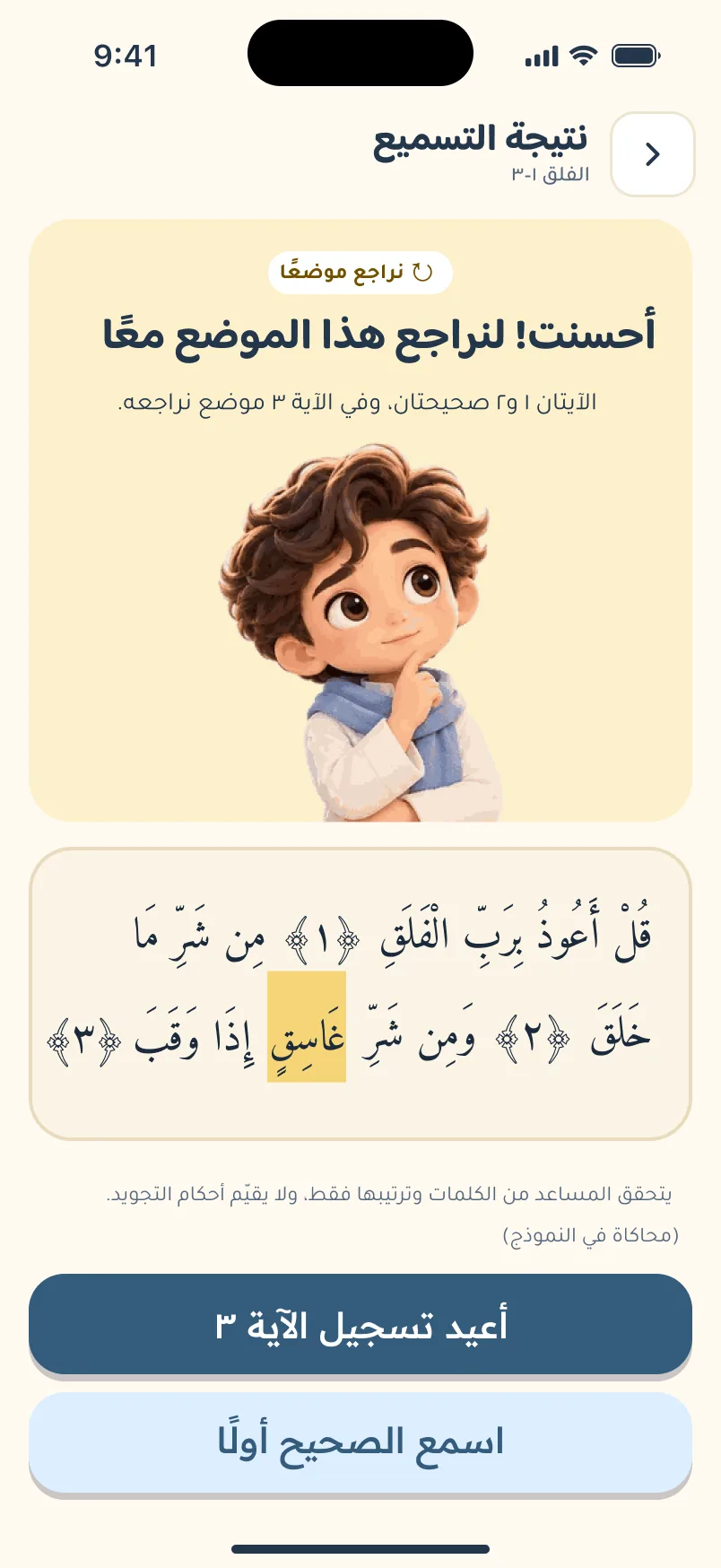
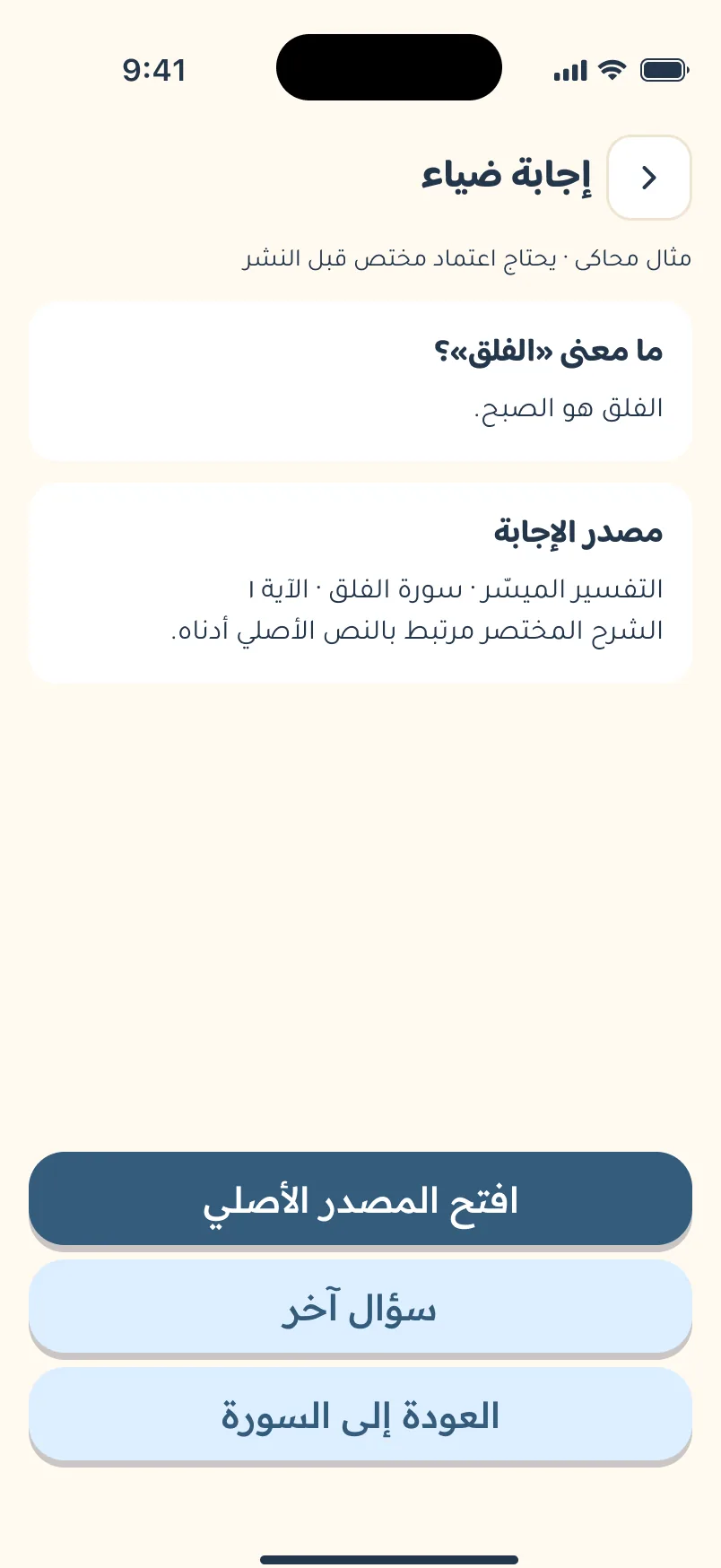
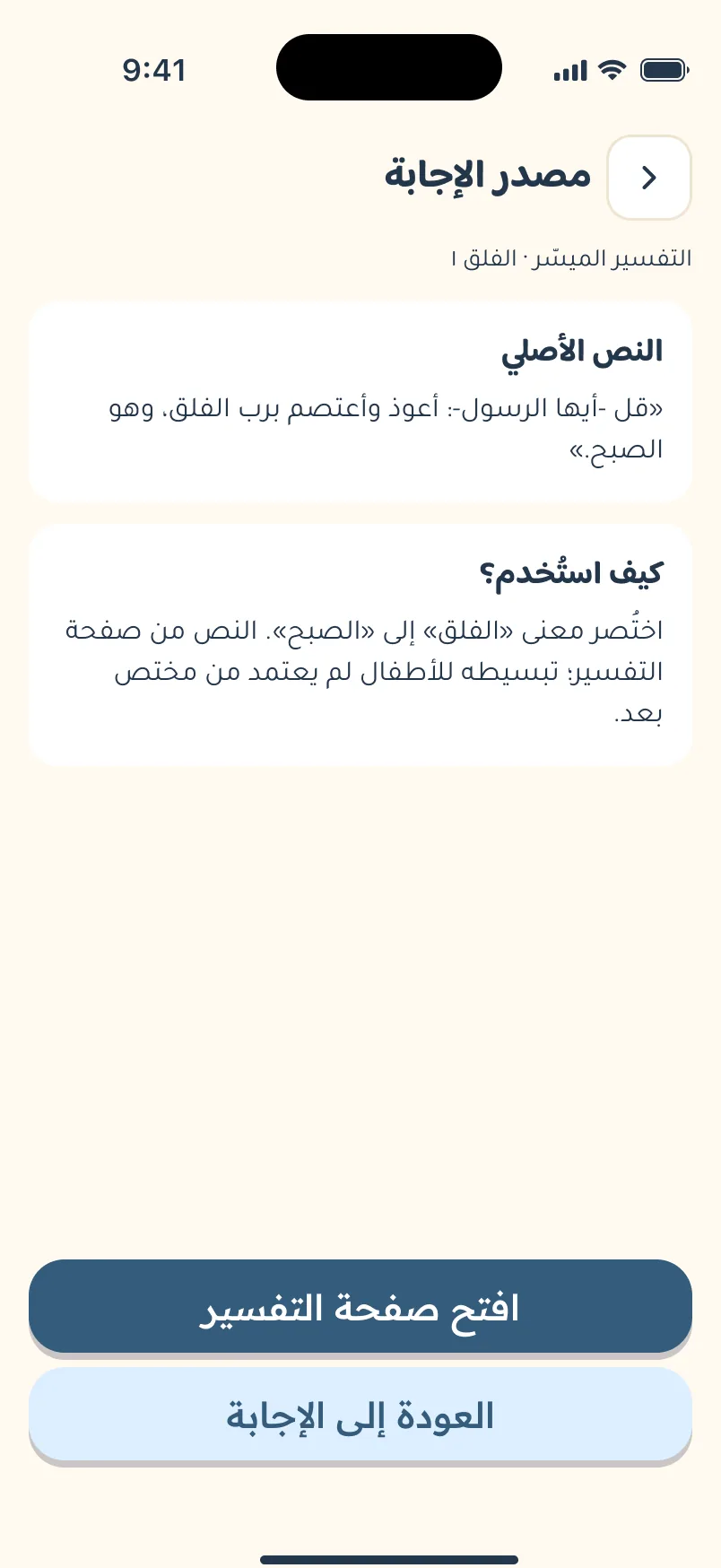
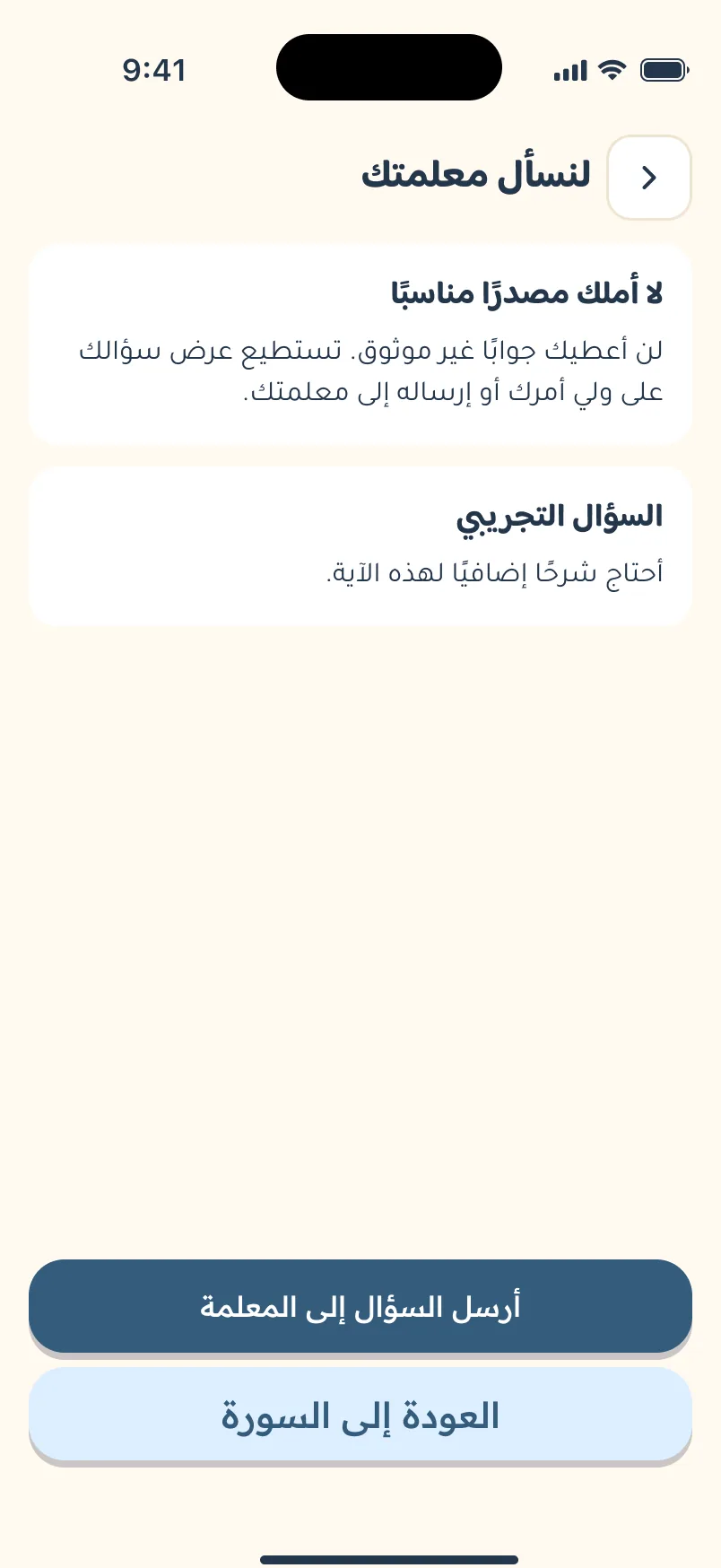
An animated walkthrough of the Figma screens, not a working prototype. Use the controls to pause or step through.
Look closer — select a screen to enlarge it
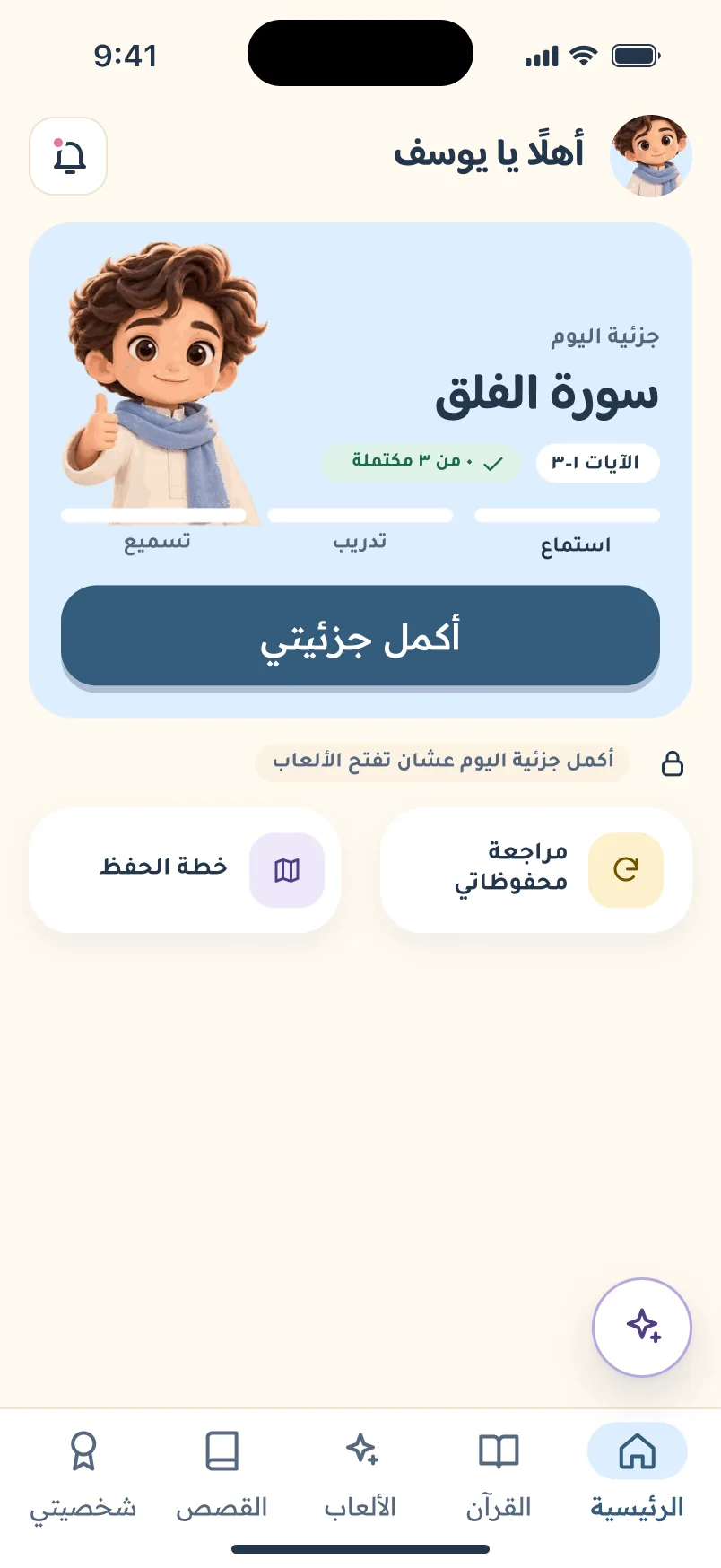
Child home: today’s portion with listen → practise → recite. Games unlock once the portion is done. Practice by gradually hiding words, so the child recalls instead of re-reading. Stuck at the start of a verse? The first hint is only the first letter. Next comes the first word, then straight back to reciting from memory. The result points to the one position to revisit, not the whole passage. Feedback is simulated in the prototype. Ask Dhiyaa: a short, age-appropriate answer, labelled as a simulated example that needs specialist approval. Every answer shows its source and position, with a button to open it. No reliable source? Dhiyaa says so and offers to send the question to the teacher. Parents can review what their child asked and where each answer came from.
Outcome
- A prototype covering the child, parent and teacher paths: listening, graduated hints, practice, recitation results and Ask Dhiyaa with sources.
- Accessibility built in: 44×44 touch areas, 52px primary buttons, 4.5:1 text contrast, and states that never rely on colour alone.
Next project
Afaq